A group of 11 leaders in additive manufacturing (AM) has joined the Digitally Enabled Competitive & Sustainable Additive Manufacturing (DECSAM) project. Led by Airbus, this £38 million, four-year UK aerospace programme will develop and deploy the latest AM technologies—such as beam shaping and in-situ process monitoring—to make metal laser powder bed fusion (L-PBF) AM more cost-effective, productive, and sustainable for flight-ready parts. The project, which runs until June 2028, is a research and innovation initiative funded through Innovate UK, the Aerospace Technology Institute (ATI), and the UK Department for Business and Trade.
By prioritising resource efficiency, material reuse, and circular design principles, DECSAM aims to reduce waste and carbon intensity across the AM value chain, supporting the aerospace sector’s transition toward net-zero manufacturing and more sustainable aviation.
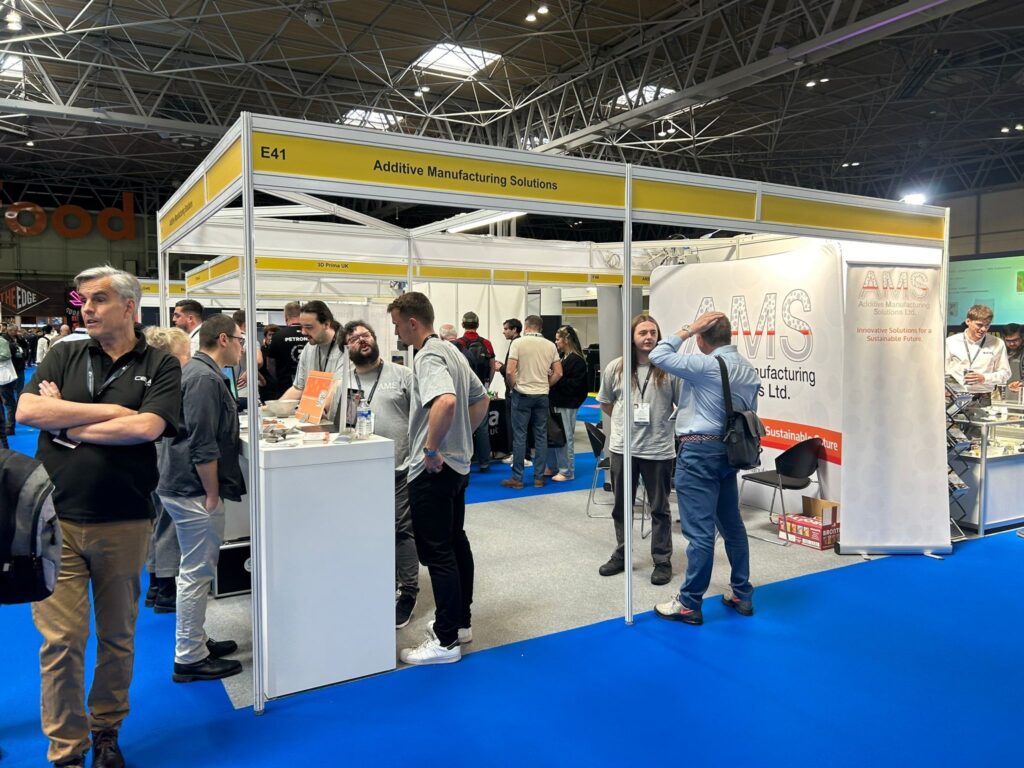
The project brings together 11 leading organisations covering aerospace OEMs, Tier 1&2 suppliers, SMEs and research institutes, providing full UK AM manufacturing chain coverage. The partners including Airbus Operations Limited (lead), Renishaw plc, ASTM International UK, Authentise Ltd, The Manufacturing Technology Centre Limited, GKN Aerospace Services Limited, Additive Manufacturing Solutions Ltd, APEX Additive Technologies Ltd, Domin Limited, University of Sheffield, and ToffeeX Limited.
“Additive manufacturing can unlock new efficiencies in aerospace, lowering costs, optimising material use, reducing weight, and consolidating complex assemblies into single parts,” said Jacqueline Castle, Chief Technology Officer at the Aerospace Technology Institute. “DECSAM unites a strong consortium to accelerate adoption in civil aerospace, aligning closely with the ATI’s additive manufacturing strategy to drive future economic growth and sustainability.”
DECSAM will demonstrate an integrated, digitally connected AM supply chain, from alloy selection and build strategies to post-processing, inspection and factory scale-up. “In order to demonstrate AMs future cost competitiveness for aerospace applications”.
What DECSAM will deliver
To cut part cost, raise quality, and shorten design-build-test loops for aerospace applications, DECSAM is structured around four innovation pillars:
- Performance: new and improved alloys, multi-physics modelling and physics-driven design)
- Productivity: high-power lasers, beam shaping, advanced scan strategies, in-situ monitoring and closed-loop control
- Scalability: end-to-end digital thread, automated sustainable factory concepts, and efficient post-processing/inspection
- Application: Integration of technologies developed to demonstrate overall cost benefit on target product applications.
Planned outputs include ground and flight-test demonstrators, validated recycled/repurposed powder routes, widened powder specifications, verified parameter themes for quality and throughput, in-process monitoring software offerings, and guidance for routes to qualification and certification, all targeted at accelerating industrial exploitation.
Our Role
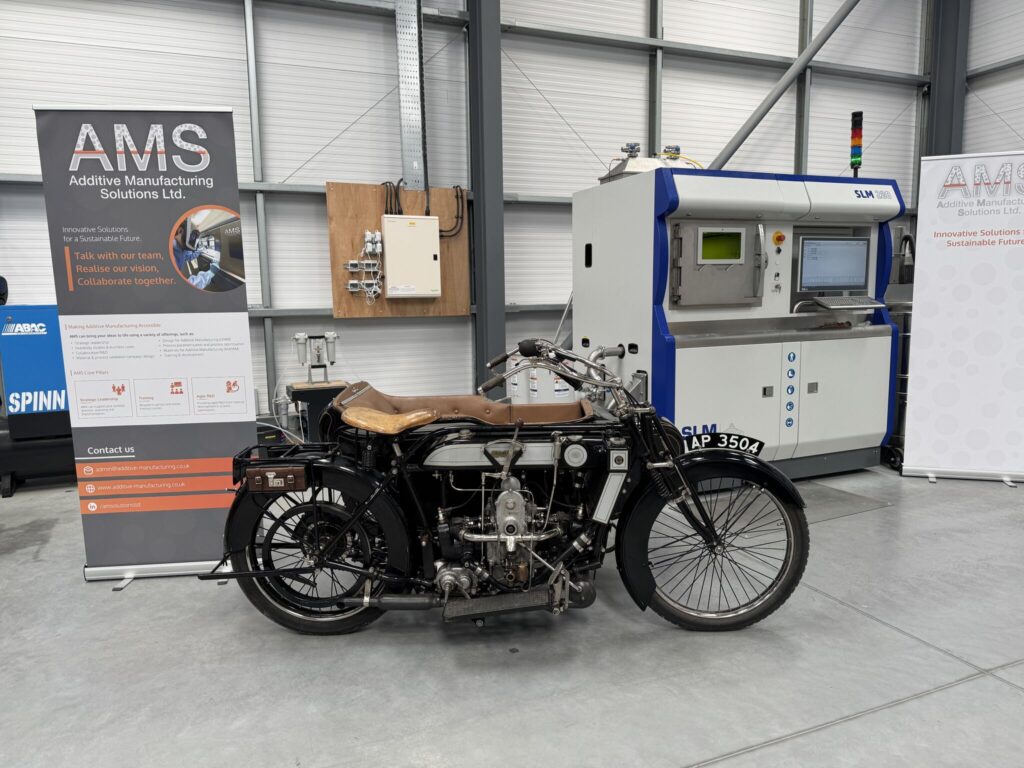
Additive Manufacturing Solutions (AMS) is a knowledge and capability hub delivering metal AM from prototype through to production, backed by qualification and testing, sustainable and next-generation material development, and training via its in-house academy. Within DECSAM, AMS will focus on boosting productivity through novel scan strategies and developing sustainable material feedstocks.
Rob says “When we created AMS, we had a view and vision that additive manufactruing needed to be more collaborative to enable us to reach the heights that technology allows. Fast forward to today and to be part of this project driving next generation capabilites with our partners and collaborators enables this vision to move towards reality. Over the past two years team AMS have developed significant capabilty from recycled and sustainable materials through to novel vectoring in laser powder fusion and we are able to move these innovations through aerospace TRL structure and realise our company tagline of ‘Innovative solutions for a sustainable future.'”.
Why it matters
L-PBF is flight-proven, but wider uptake is constrained by end-to-end productivity gaps, fragmented data/QA, and reliance on overseas steps (powder, HIP, advanced heat-treat). DECSAM closes those gaps by linking UK materials supply, machine capability, in-process quality assurance, a robust digital thread, and factory scale-up—so parts are repeatable, cost-competitive, and producible at volume in the UK, supporting net-zero 2050.
The programme is business-case led: recycled/UK-made powders; optimised build and nesting; in-process monitoring with closed-loop control to reduce or eliminate HIP/CT where feasible; and parameter/alloy development to cut finishing time. Cost-modelled demonstrators (e.g., an aircraft floor beam) show the shift from today’s “as-is” to a digitally connected, production-ready “to-be” at a cost point which enables AM to buy its way into serial aerospace production.
Focus use cases include ultra-efficient wing & engine structures and hydrogen subsystems (conformal heat exchangers, fuel-cell manifolds). Alongside performance gains, DECSAM mitigates single-source casting risks, on-shores critical pre-form manufacture, and advances compact AM-enabled actuation toward power-by-wire—delivering more right-first-time, certifiable parts, shorter lead times, a resilient UK supply chain, and cleaner aerospace manufacturing.
DECSAM at a glance:
- Value & timing: £38 million ; June 2024 – June 2028 (48 months).
- Leadership: Airbus (project lead) with 11 project partners across OEMs, Tier-1s, SMEs, RTOs and academia.
- Innovation pillars: Performance, Productivity, Scalability, Demonstration for L-PBF.
- Planned outputs: Ground and flight demonstrators; recycled/reused powder routes; in-process monitoring with closed-loop control; a connected digital thread; factory design for scale-up; and clear pathways to qualification and certification.